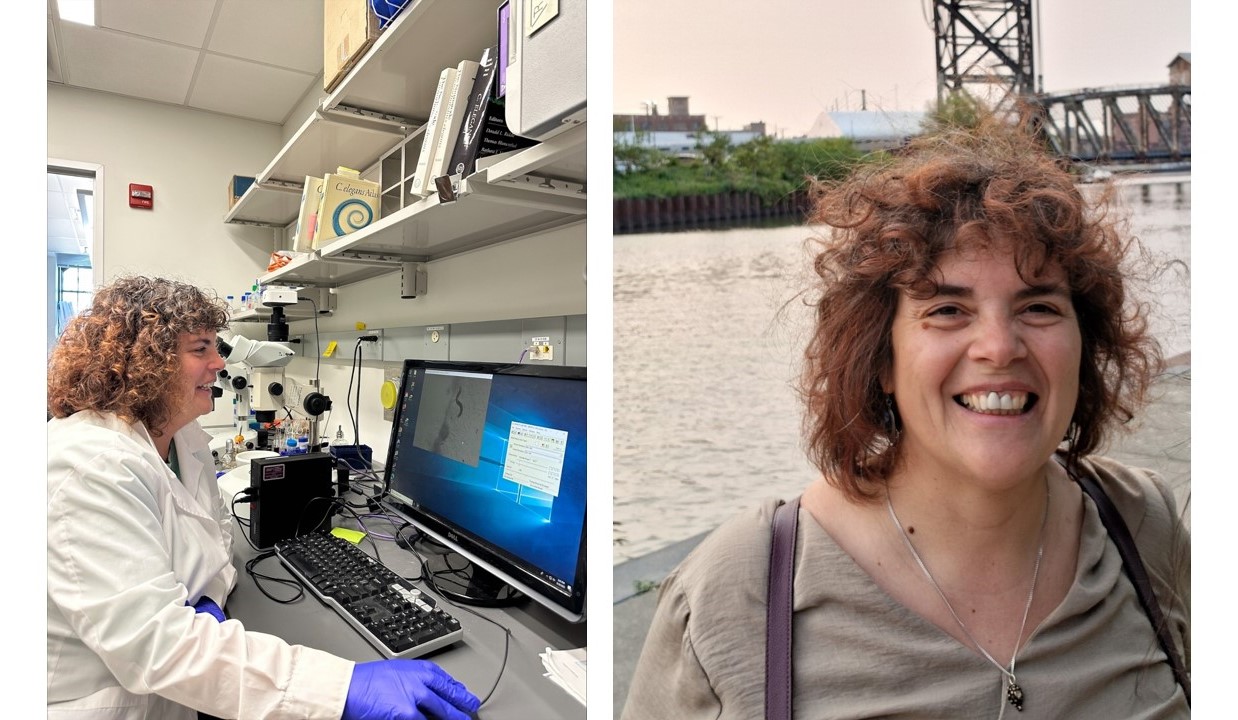
Dr. Zoi Erpapazoglou, a postdoctoral researcher in the lab of Georgios Skretas at the Biomedical Sciences Research Center (BSRC) “Alexander Fleming”, recently completed a six-month short-term scientific mission at the laboratory of Professor. Evangelos Kiskinis at Northwestern University (Feinberg School of Medicine) in Chicago, USA.
Zoi’s research focuses on the discovery of novel inhibitors of protein misfolding and aggregation, processes that are implicated in several human diseases. This research activity was supported by the ERA Chairs project “Boost4Bio” – Boosting Bio-Innovation and Bio-Entrepreneurship by Establishing Excellence in Biomolecular Engineering and Synthetic Biology, hosted by BSRC “Alexander Fleming”.
Protein misfolding is associated with serious pathological conditions, including Alzheimer’s disease and amyotrophic lateral sclerosis (ALS).
“My goal was to gain experience with experimental models used to study ALS, such as motor neurons derived from patient cells, as well as genetically modified worms carrying disease-causing mutations. In the long term, we would like to establish some of these models in our laboratory in Greece to capacitate further our early-stage drug discovery pipeline at home. At the same time, I used these models to evaluate the activity of molecules against ALS that we have discovered in our lab to see if they are effective in “curing” the disease-related “symptoms” in these models. Very excitingly, they were! And there are actually among the very few chemical molecules which have so far shown efficacy in these models” she explains.
For the Greek researcher, the experience was highly positive for several reasons. Most importantly, it allowed her to achieve many of her initial objectives and generate results that significantly advance the research being conducted in the laboratory in Greece.
“I gained new technical expertise and a broader perspective on ALS research through interactions with members of the host laboratory and researchers from other groups, as well as through my participation in high-quality seminars. Although the workload did not allow me to take full advantage of all the opportunities available, it was truly refreshing to work in such a dynamic research environment” Dr Erpapazoglou concludes.