
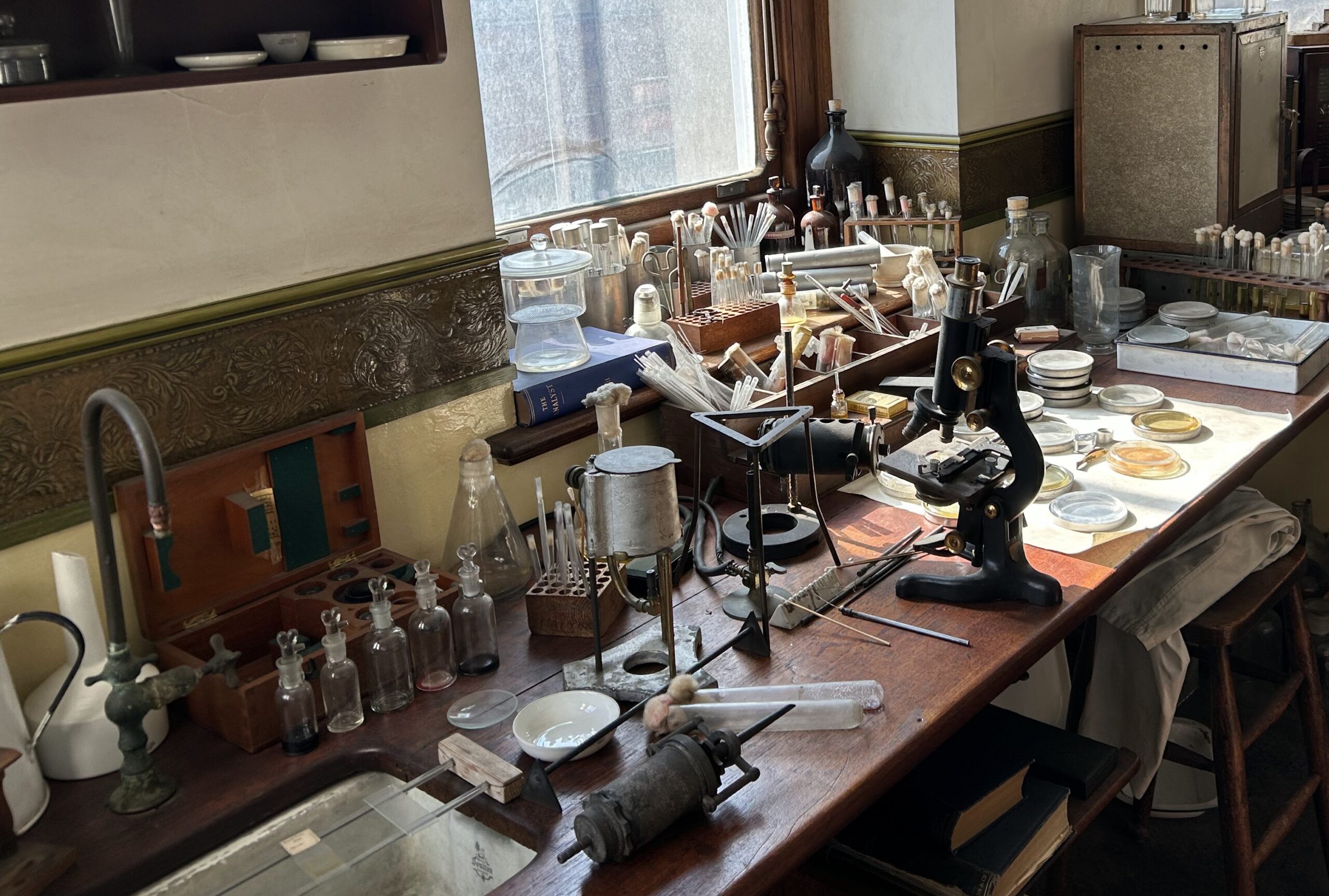
What happens to the legacy of a scientist when they are no longer there to tell their story? Who preserves the places, objects, documents and memories that make scientific discoveries part of our collective heritage?
The story of Kevin Brown, highlighted in WIRED Greece, offers a compelling perspective on these questions. Through his dedication to preserving the history of Alexander Fleming and his laboratory, Brown has helped safeguard an important chapter in the history of modern medicine: the discovery of penicillin.
His work goes beyond preserving a historical laboratory. It is about protecting the material and human traces of scientific achievement, ensuring that the stories behind major discoveries are not lost with the passing of the scientists who made them possible.
Kevin Brown’s efforts remind us that scientific heritage is an essential part of research itself. Preserving the history of science allows future generations to understand not only what was discovered, but also the people, environments and circumstances that made those discoveries possible.
As research continues to shape our future, recognising and protecting its past becomes equally important.
Read the full story in WIRED Greece:
What Remains When Scientists Leave